
FLYING GOT YOU FLUSTERED?
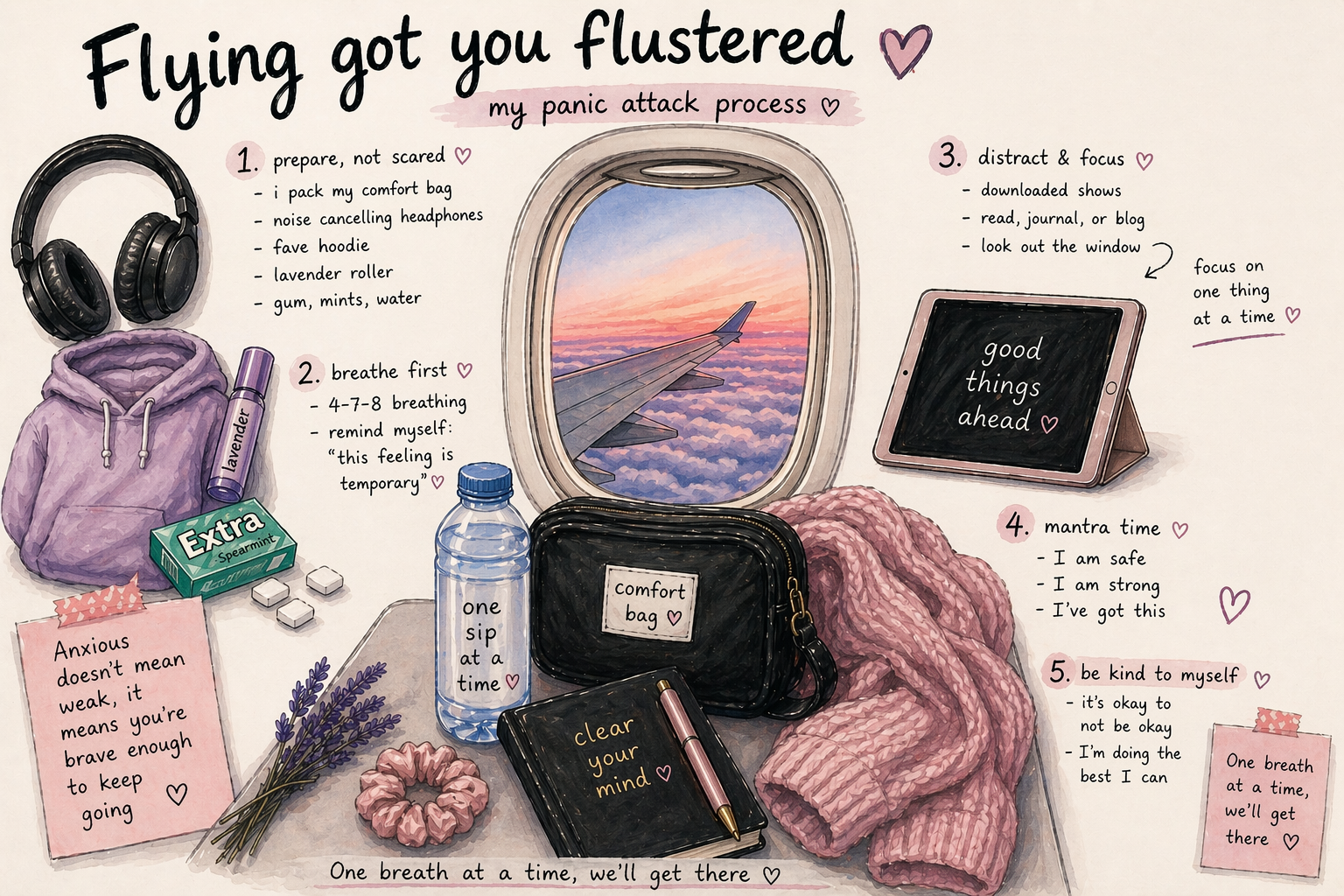
You’re not alone! As a longtime ‘fear of having a panic attack’ and a flight anxiety traveler myself, I have a few trip tips that help me. First, I try to get a good night’s sleep the night before my flight. I take deep breaths for a minute numerous times prior to and while on the flight. Experts say you should tell others, like your travel companion, how you’re feeling. You should not keep your fear to yourself. Many years ago I utilized self-help tapes from the Midwest Center for Anxiety and Depression. The biggest help for me….It’s okay to tell a flight attendant about your fears. They are trained on how to help you. I don’t drink coffee or consume sugar prior to flying. I keep myself busy by watching movies, or playing games I’ve downloaded. How you’re feeling is okay. Give yourself some grace.
PRE-FLIGHT
- Learn about how safe flying really is, and how planes work. Anxiety often •feeds on uncertainty or catastrophic “what-if” thoughts. Familiarizing yourself with facts (why turbulence is usually harmless, how airplanes are designed, how common safe flights are) can reduce “fear of the unknown.”
- Plan ahead and reduce pre-flight stress. Arrive at the airport early to avoid feeling rushed.
- Practice relaxation and grounding techniques ahead of time. Gentle daily meditation, mindfulness or breathwork can build familiarity and make it easier to stay calm
DURING THE FLIGHT
- BREATHE. For instance, slow, deep breaths (longer exhales) can calm your nervous system, reduce heart-rate and help you feel more grounded. The National+2Healthline+2
- Ground yourself with sensory exercises: for example, the “5-4-3-2-1” rule (notice 5 things you see, 4 you can touch, 3 you can hear, 2 you can smell, 1 you can taste) — this pulls attention away from inner panic and into present reality. Healthline+2Forbes+2
- Distract and comfort your mind/body: listen to calming music or podcasts, read a book, play a game, or use other comfort-items (travel pillow, soft object, noise-cancelling headphones) to shift focus away from anxiety. Sharp HealthCare+2Gamintraveler+2
- Reassure yourself — mentally label what you’re feeling. Remind yourself that what you feel (racing heart, dizziness, fear of turbulence) is anxiety, not actual danger. This helps separate “fear” from “real threat.” ADAA+2Psychology Today+2
- If comfortable, tell a flight attendant or trusted companion you’re feeling anxious. Their reassurance, calm presence, or simply being aware can help — knowing someone notices and cares can make panic feel less isolating. Allen Carr’s Easyway+1
INTERNATIONAL ADVENTURES – Helpful links
CDC, Center for Disease Control
Health & Safety are my top priority. I always check to ensure we have the recommended, most current vaccines. Your local Health Department or your medical provider are also often great resources for information and for obtaining the vaccines.
Your personal safety is paramount, which is why I always check the State Department’s current Travel Advisory Levels. The site provides detailed, destination-specific travel and risk information